
global point of care
LEICHTE TBI
OBJEKTIV BEURTEILEN
DIREKT AM POINT OF CARE
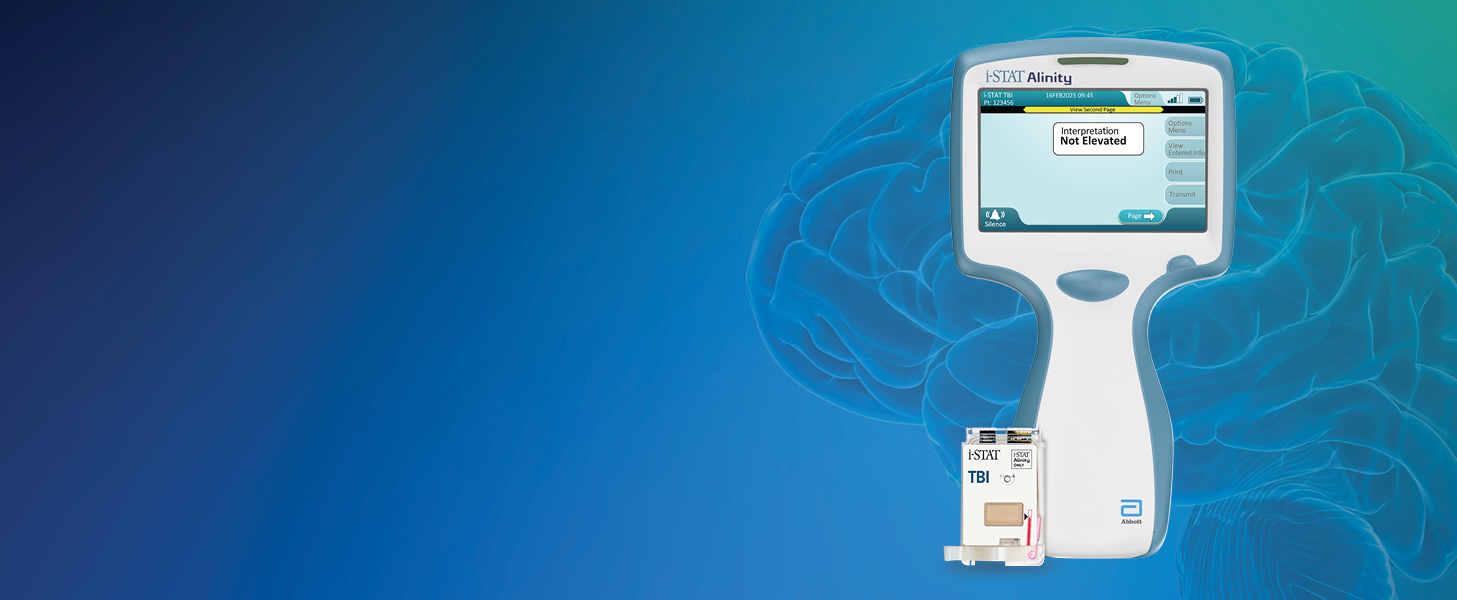
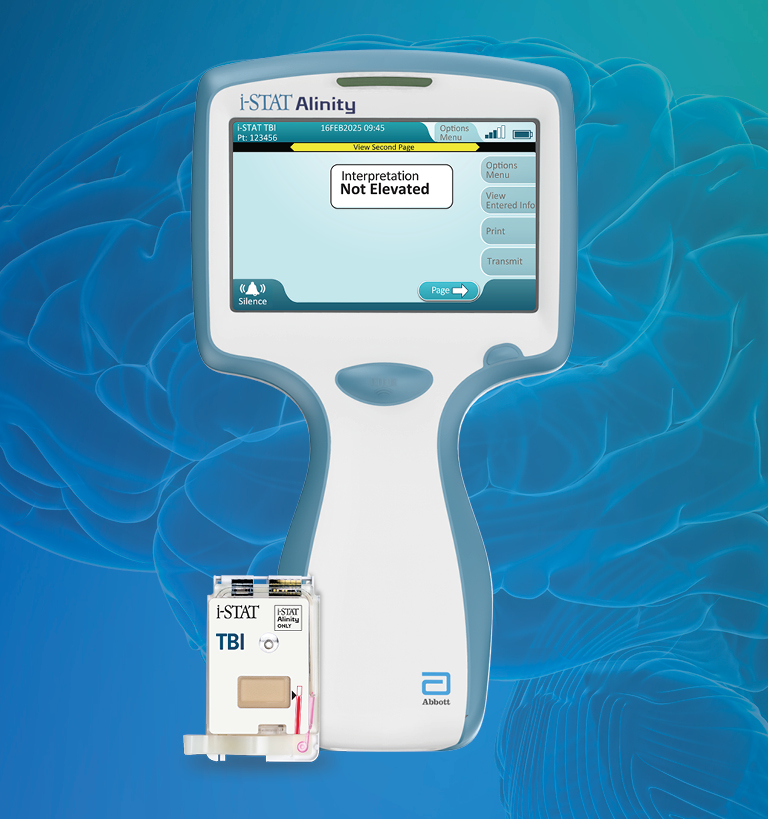
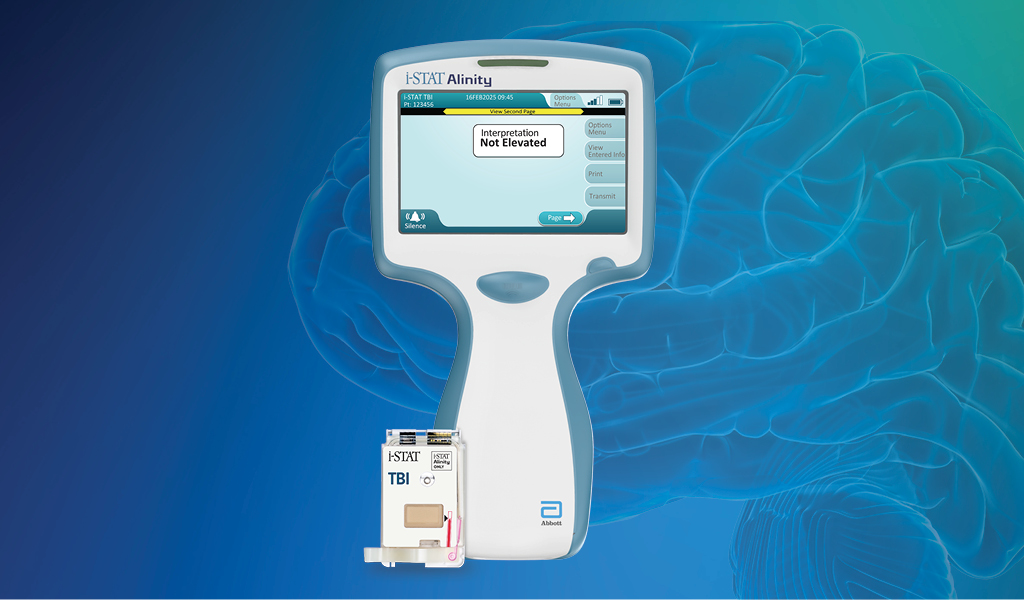
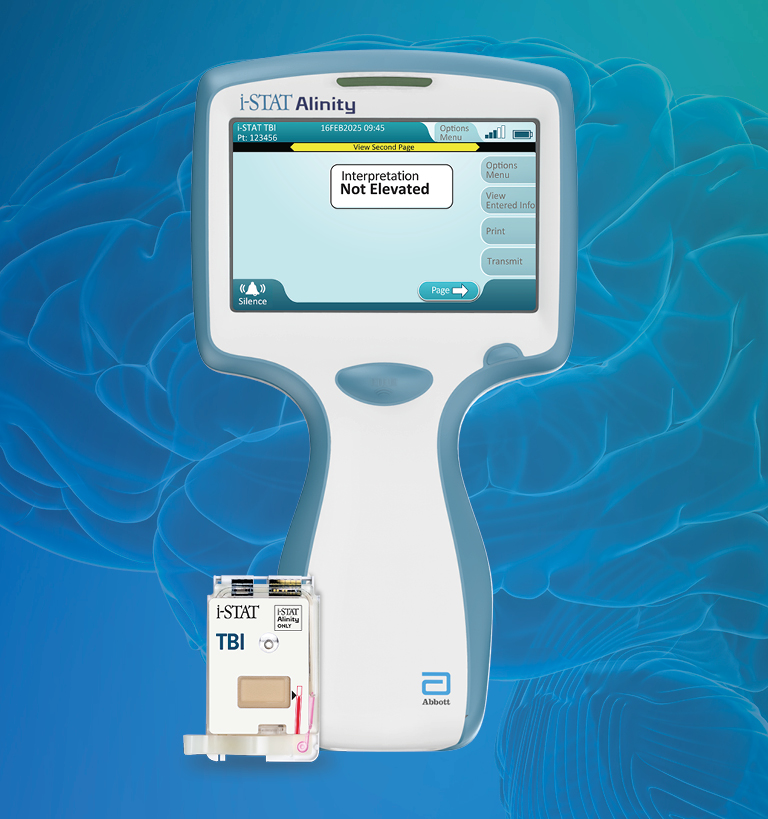
Die i-STAT TBI -Kartusche* ist der erste Point-of-Care-Vollbluttest für leichte TBI, der hirnspezifische Biomarker misst und in 15 Minuten objektive Daten liefert .1
*Nur für das i-STAT Alinity-Instrument verfügbar | TBI = traumatische Hirnverletzung
LEICHTE TBI
OBJEKTIV BEURTEILEN
DIREKT AM POINT OF CARE
Die i-STAT TBI -Kartusche* ist der erste Point-of-Care-Vollbluttest für leichte TBI, der hirnspezifische Biomarker misst und in 15 Minuten objektive Daten liefert .1
*Nur für das i-STAT Alinity-Instrument verfügbar | TBI = traumatische Hirnverletzung
ZUVERLÄSSIGES 24-STÜNDIGES TESTFENSTER AUFGRUND DER KOMPLEMENTÄREN KINETIK VON GFAP UND UCH-L1 1,2
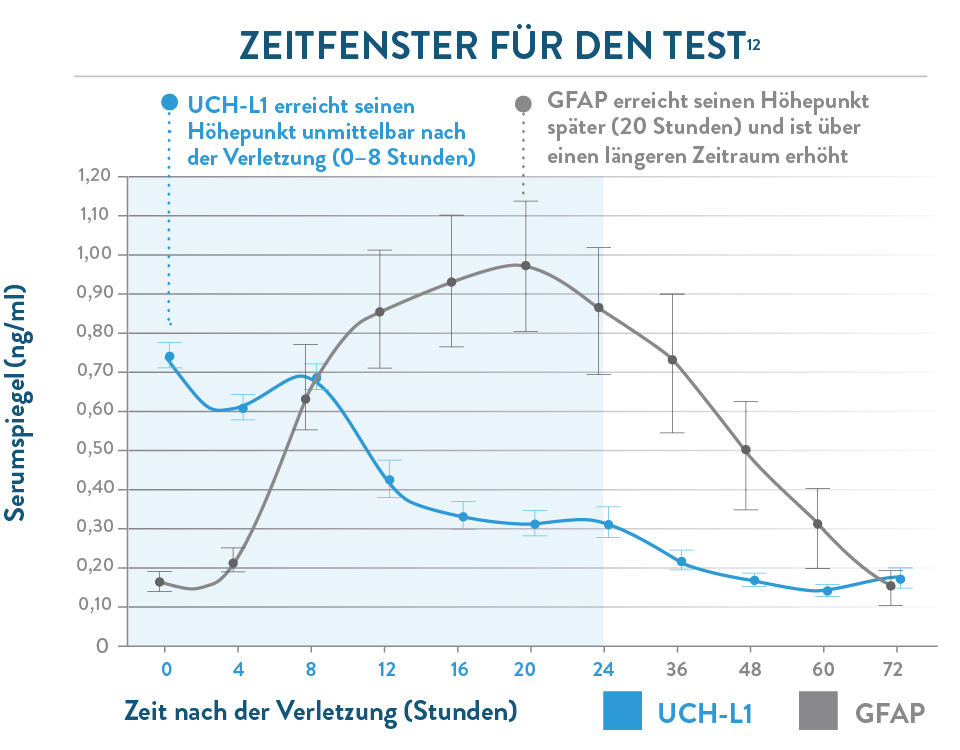
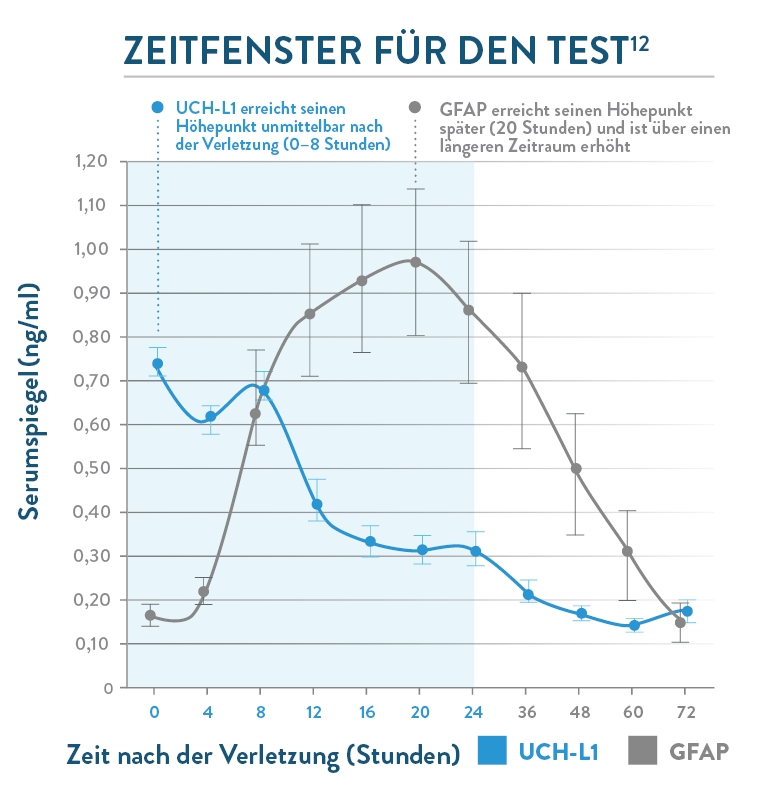
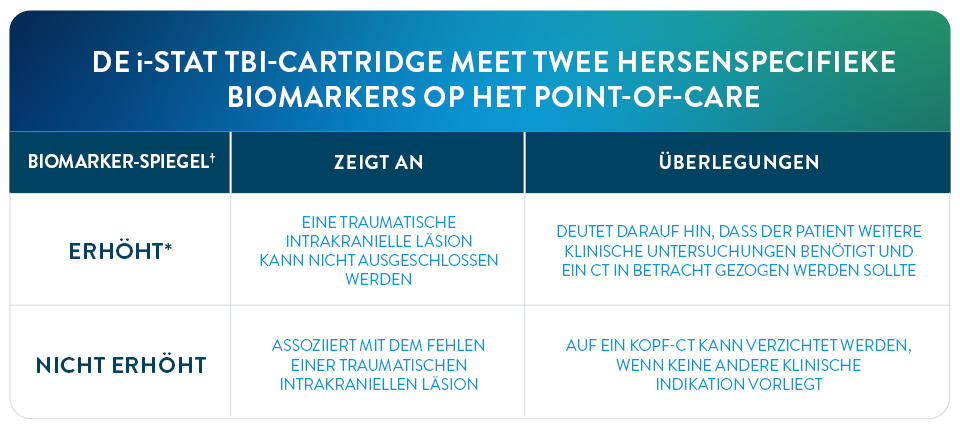
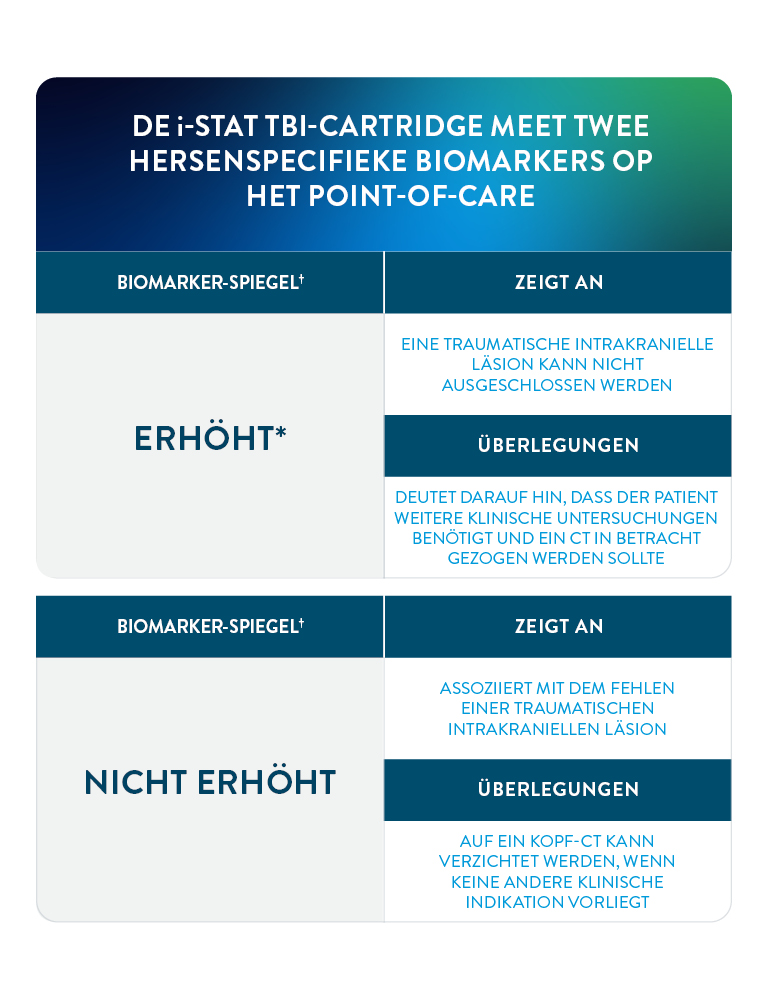
Wenn sowohl GFAP als auch UCH-L1 „nicht erhöht“ sind, ist dies mit dem Fehlen akuter traumatischer intrakranieller Läsionen verbunden, die auf einem CT-Scan des Kopfes sichtbar wären.1
*Wenn einer der Biomarker erhöht ist, sollten weitere klinische Untersuchungen und ein CT in Betracht gezogen werden.
Die i-STAT TBI -Kartusche ist nicht als eigenständiges Bewertungsinstrument konzipiert, sondern als Ergänzung zu anderen klinischen Informationen, um die Bewertung von Patienten zu unterstützen, die für eine Standard-Neurobildgebung in Frage kommen.
INNOVATION IN DER PATIENTENVERSORGUNG
Welche Auswirkungen wird die i-STAT TBI -Kartusche auf Ihre Patienten und Ihr Pflegeteam haben? Setzen Sie sich mit uns in Verbindung und entdecken Sie unsere innovativen Point-of-Care-Produkte, die innerhalb weniger Minuten Ergebnisse in Laborqualität liefern.



INNOVATION IN DER PATIENTENVERSORGUNG
Welche Auswirkungen wird die i-STAT TBI-Kartusche auf Ihre Patienten
und Ihr Pflegeteam haben?
Zusätzliche Ressourcen
In diesem Whitepaper erfahren Sie mehr über die Rolle von Biomarkern bei der Bewertung leichter traumatischer Hirnverletzungen (auf Englisch).
Erfahren Sie mehr über die Rolle von Biomarkern (GFAP und UCH-L1) bei der Bewertung leichter traumatischer Hirnverletzungen (mTBI) (auf Englisch).
Referenzen
- i-STAT TBI cartridge. Instructions for use. Abbott Point of Care Inc. Abbott Park, IL; 2024.
- Zetterberg H, Blennow K. Fluid biomarkers for mild traumatic brain injury and related conditions. Nat Rev Neurol. 2016;12(10):563-574.
- Chodobski A, Zink BJ, Symydynger-Chodobska J. Blood-brain barrier pathophysiology in traumatic brain injury. Transl Stroke Res. 2011;2(4):492-516.
- Metting Z, Wilczak N, Rodiger LA, et al. GFAP and S100B in the acute phase of mild traumatic brain injury. Neurology. 2012;78(18):1428-1433.
- Papa L, Lewis LM, Falk JL, et al. Elevated levels of serum glial fibrillary acidic protein breakdown products in mild and moderate traumatic brain injury are associated with intracranial lesions and neurosurgical intervention. Ann Emerg Med. 2012;59(6):471-483.
- Jones A, Jarvis P. Review of the potential use of blood neuro-biomarkers in the diagnosis of mild traumatic brain injury. Clin Exp Emerg Med. 2017;4(3):121-127.
- Schulte S, Podlog LW, Hamson-Utley JJ, et al. A systematic review of the biomarker S100B: implications for sport-related concussion management. J Athl Train. 2014;49(6):830-850.
- Steiner J, Bernstein H-G, Bielau H, et al. Evidence for a wide extra-astrocytic distribution of S100B in human brain. BMC Neurosci. 2007;8:2.
- Pelinka LE, Kroepfl A, Schmidhammer R, et al. Glial fibrillary acidic protein in serum after traumatic brain injury and multiple trauma. J Trauma. 2004;57(5):1006-1012.
- Diaz-Arrastia R, Wang KKW, Papa L, et al. Acute biomarkers of traumatic brain injury: relationship between plasma levels of ubiquitin C-terminal hydrolase-L1 and glial fibrillary acidic protein. J Neurotrauma. 2014;31(1):19-25.
- Papa L, Lewis LM, Silvestri S, et al. Serum levels of ubiquitin C-terminal hydrolase (UCH-L1) distinguish mild traumatic brain injury (TBI) from trauma controls and are elevated in mild and moderate TBI patients with intracranial lesions and neurosurgical intervention. J Trauma Acute Care Surg. 2012;72(5):1335-1344.
- Papa L, Brophy GM, Welch RD, et al. Time course and diagnostic accuracy of glial and neuronal blood biomarkers GFAP and UCH-L1 in a large cohort of trauma patients with and without mild traumatic brain injury. JAMA Neurol. 2016;73(5):551-560.