
Global Point Of Care
EVALUACIÓN OBJETIVA
DE LA TBI LEVE
EN EL PUNTO DE ATENCIÓN
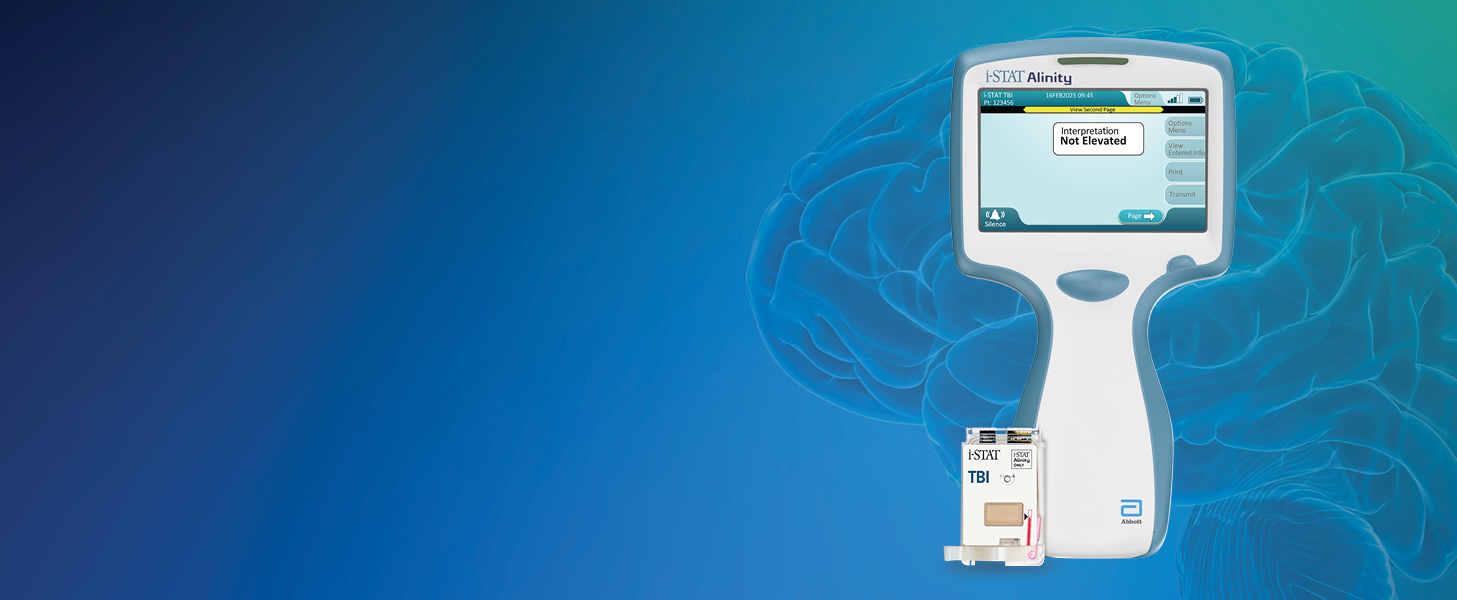
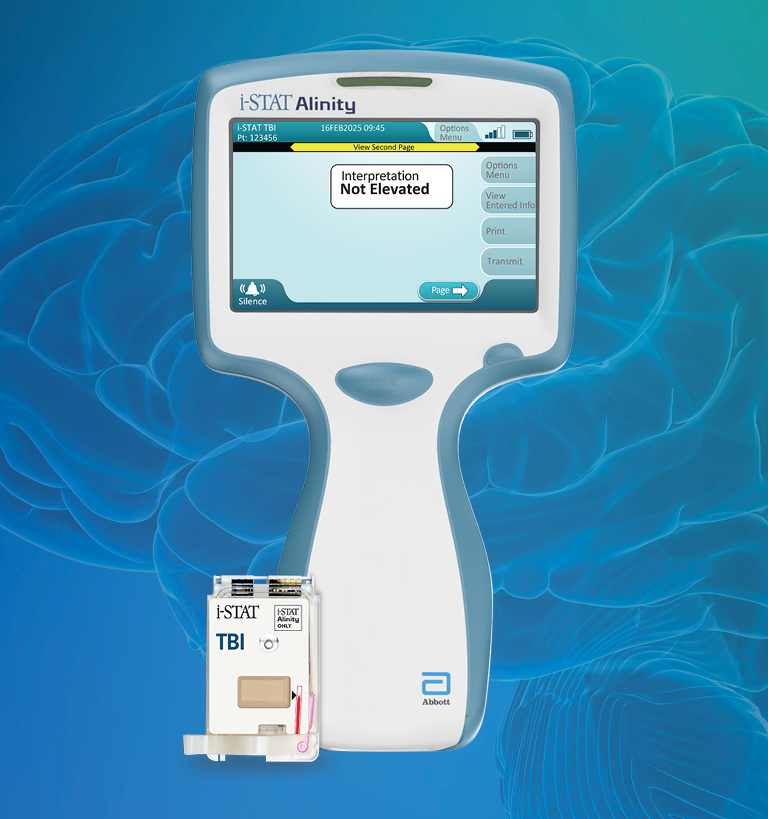
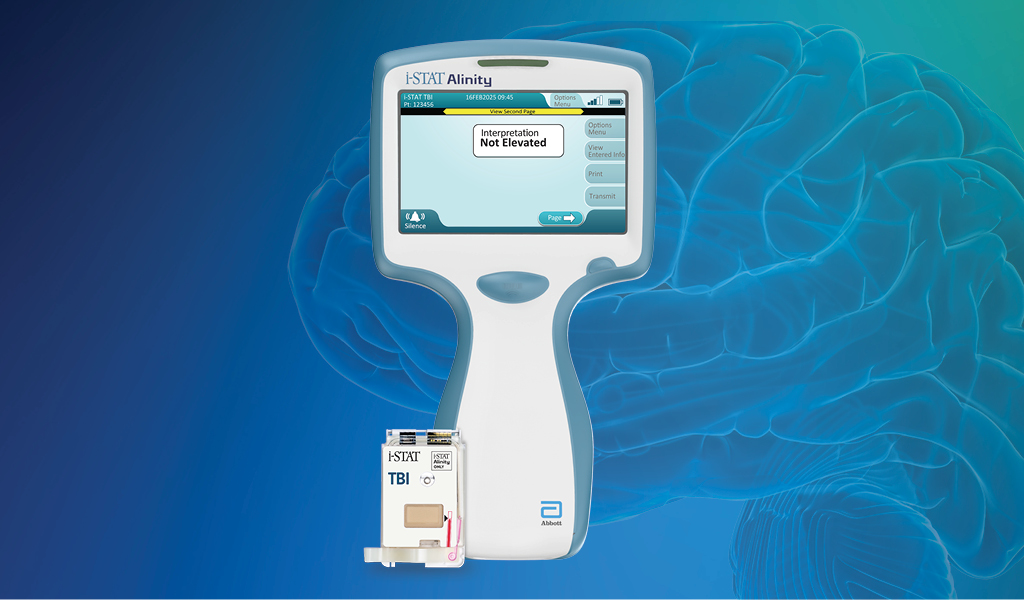
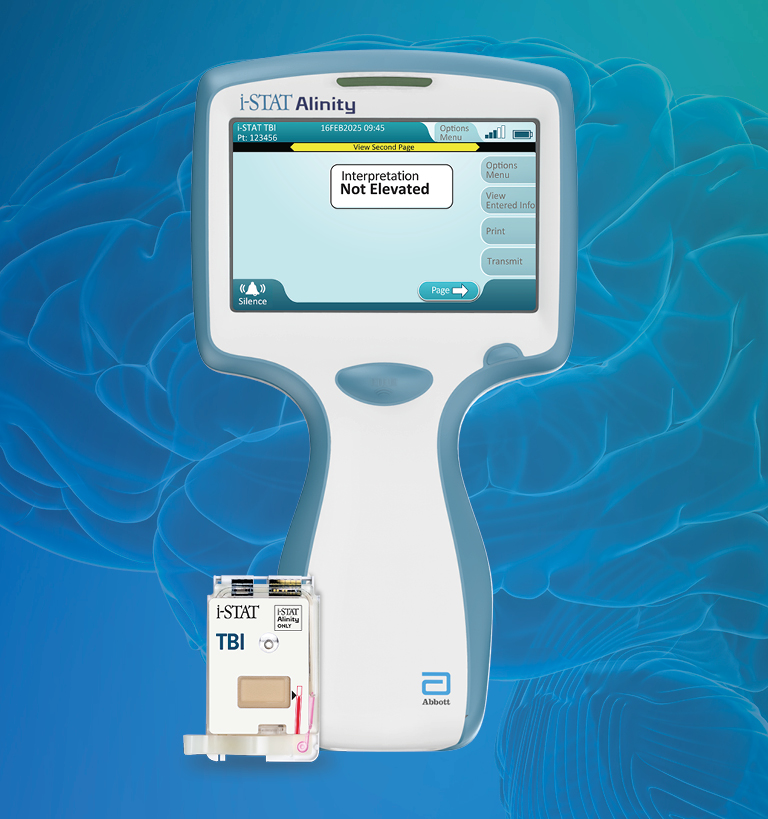
El cartucho i-STAT TBI cartridge* es la primera prueba de TBI leve en sangre total venosa para el punto de atención que mide biomarcadores específicos del cerebro y proporciona datos objetivos en 15 minutos.1
*Disponible solo en el instrumento i-STAT Alinity | TBI = lesión cerebral traumática
EVALUACIÓN OBJETIVA
DE LA TBI LEVE
EN EL PUNTO DE ATENCIÓN
El cartucho i-STAT TBI cartridge* es la primera prueba de TBI leve en sangre total venosa para el punto de atención que mide biomarcadores específicos del cerebro y proporciona datos objetivos en 15 minutos.1
*Disponible solo en el instrumento i-STAT Alinity | TBI = lesión cerebral traumática
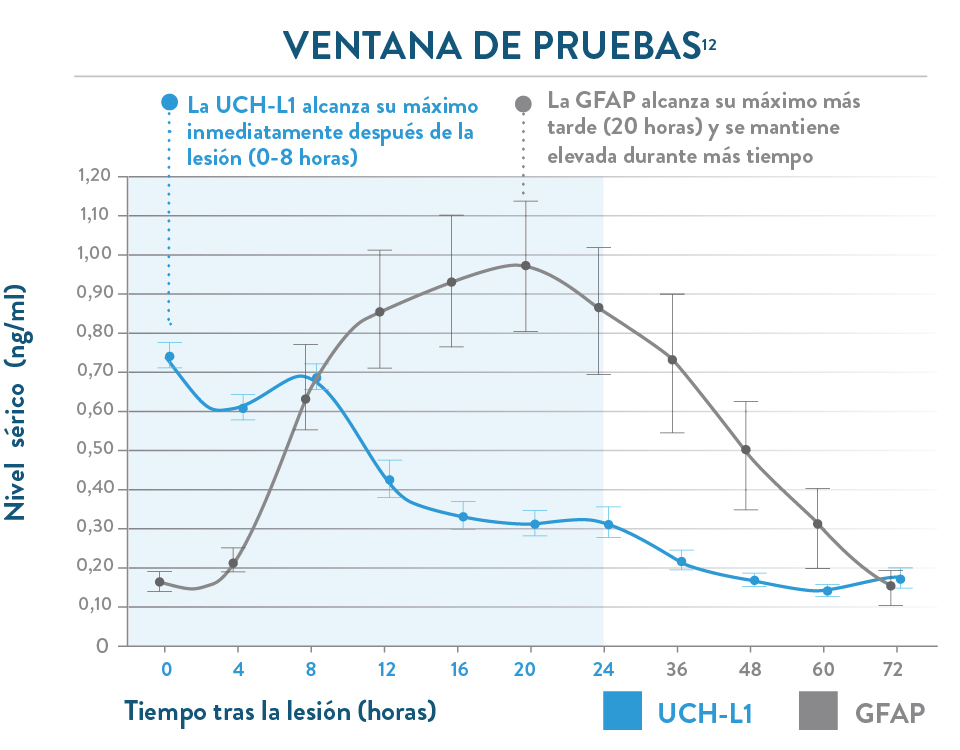
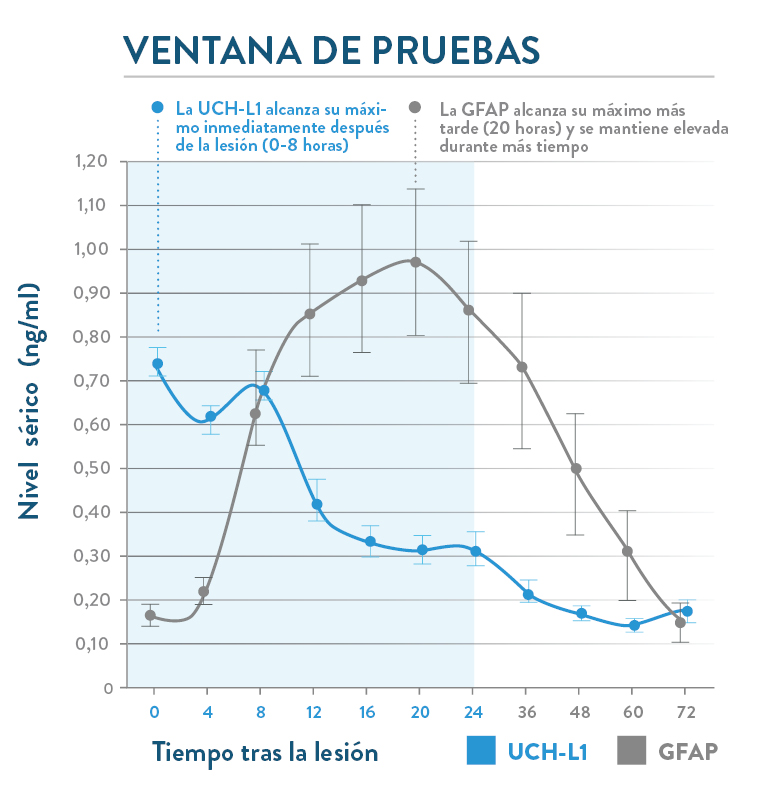
VENTANA DE PRUEBAS FIABLE DE 24 HORAS A PARTIR DE LA CINÉTICA COMPLEMENTARIA DE LA GFAP Y LA UCH-L1 1,2

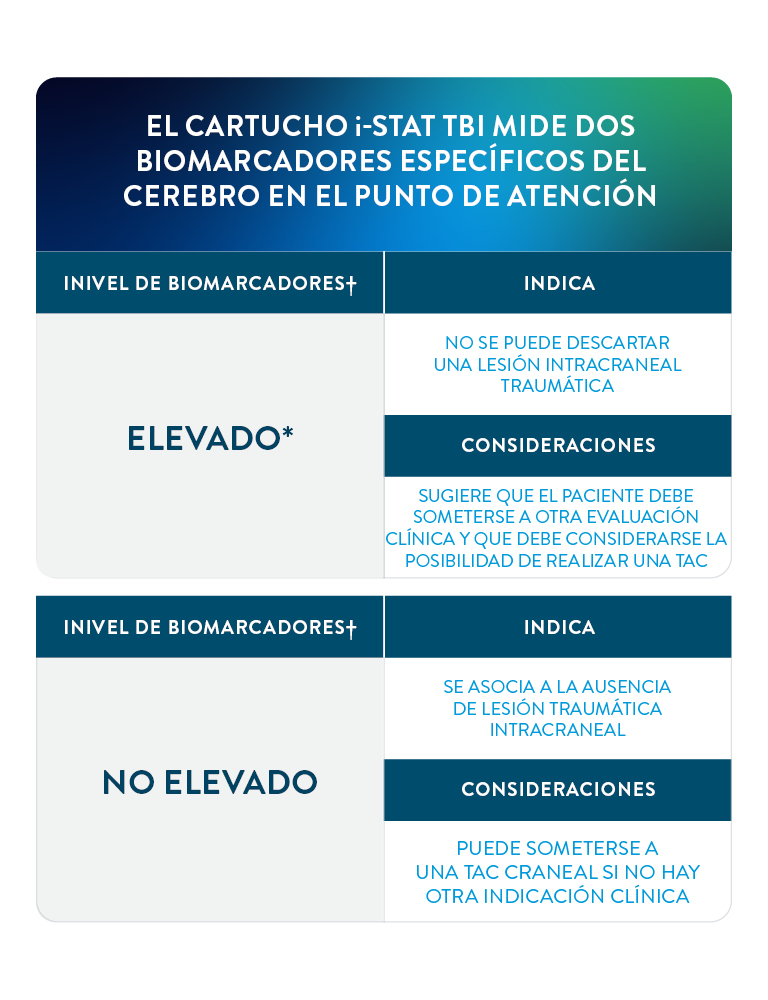
Cuando los niveles de GFAP y UCH-L1 son «No elevados», esto se asocia a la ausencia de lesiones intracraneales traumáticas agudas que podrían verse en una TAC de la cabeza.1
*Si cualquiera de los biomarcadores es elevado, se debe seguir considerando otra evaluación clínica y la TAC.
El cartucho i-STAT TBI cno es una herramienta de evaluación independiente, sino un complemento a otra información clínica que ayuda a evaluar pacientes considerados para someterse a un estudio estándar de imágenes neurológicas en el punto de atención.
INNOVACIONES EN LA ATENCIÓN AL PACIENTE
¿Qué impacto tendrá el cartucho i-STAT TBI en los pacientes y en su equipo de asistencia? Póngase en contacto con nosotros y descubra nuestros innovadores productos para el punto de atención que ofrecen resultados con calidad de laboratorio en cuestión de minutos.



INNOVACIONES EN LA ATENCIÓN AL PACIENTE
¿Qué impacto tendrá el cartucho i-STAT TBI en los pacientes
y en su equipo de asistencia?
RECURSOS ADICIONALES
Este informe técnico explica en mayor detalle la función que desempeñan los biomarcadores en la evaluación de lesiones cerebrales traumáticas leves (en inglés).

Descubra más sobre la función de los biomarcadores (GFAP y UCH-L1) en la evaluación de la lesión cerebral traumática leve (mTBI) (en inglés).
Referencias
- i-STAT TBI cartridge. Instructions for use. Abbott Point of Care Inc. Abbott Park, IL; 2024.
- Zetterberg H, Blennow K. Fluid biomarkers for mild traumatic brain injury and related conditions. Nat Rev Neurol. 2016;12(10):563-574.
- Chodobski A, Zink BJ, Symydynger-Chodobska J. Blood-brain barrier pathophysiology in traumatic brain injury. Transl Stroke Res. 2011;2(4):492-516.
- Metting Z, Wilczak N, Rodiger LA, et al. GFAP and S100B in the acute phase of mild traumatic brain injury. Neurology. 2012;78(18):1428-1433.
- Papa L, Lewis LM, Falk JL, et al. Elevated levels of serum glial fibrillary acidic protein breakdown products in mild and moderate traumatic brain injury are associated with intracranial lesions and neurosurgical intervention. Ann Emerg Med. 2012;59(6):471-483.
- Jones A, Jarvis P. Review of the potential use of blood neuro-biomarkers in the diagnosis of mild traumatic brain injury. Clin Exp Emerg Med. 2017;4(3):121-127.
- Schulte S, Podlog LW, Hamson-Utley JJ, et al. A systematic review of the biomarker S100B: implications for sport-related concussion management. J Athl Train. 2014;49(6):830-850.
- Steiner J, Bernstein H-G, Bielau H, et al. Evidence for a wide extra-astrocytic distribution of S100B in human brain. BMC Neurosci. 2007;8:2.
- Pelinka LE, Kroepfl A, Schmidhammer R, et al. Glial fibrillary acidic protein in serum after traumatic brain injury and multiple trauma. J Trauma. 2004;57(5):1006-1012.
- Diaz-Arrastia R, Wang KKW, Papa L, et al. Acute biomarkers of traumatic brain injury: relationship between plasma levels of ubiquitin C-terminal hydrolase-L1 and glial fibrillary acidic protein. J Neurotrauma. 2014;31(1):19-25.
- Papa L, Lewis LM, Silvestri S, et al. Serum levels of ubiquitin C-terminal hydrolase (UCH-L1) distinguish mild traumatic brain injury (TBI) from trauma controls and are elevated in mild and moderate TBI patients with intracranial lesions and neurosurgical intervention. J Trauma Acute Care Surg. 2012;72(5):1335-1344.
- Papa L, Brophy GM, Welch RD, et al. Time course and diagnostic accuracy of glial and neuronal blood biomarkers GFAP and UCH-L1 in a large cohort of trauma patients with and without mild traumatic brain injury. JAMA Neurol. 2016;73(5):551-560.