
Global Point of Care

Webinars

Using implementation science to improve uptake of i-STAT TBI test in the emergency dept: Lessons learned and future opportunities
Published August 13, 2026
Summary
This webinar featuring Dr. Shawn R. Eagle examines how implementation science principles were applied at the University of Pittsburgh Medical Center (UPMC) to support adoption of Abbott's point-of-care i-STAT TBI whole-blood cartridge and i-STAT Alinity instrument in the emergency department. Dr. Eagle will present early outcomes data and discuss the test's potential to reduce unnecessary head CT head and improve ED throughput.
Learning Objectives
- Applying implementation science frameworks to point-of-care TBI testing adoption in the ED
- Clinical rationale for TBI biomarker testing and the role of the i-STAT TBI cartridge in helping rule out intracranial injury while reducing radiation exposure
- Operational and financial impact at UPMC: CT utilization, turnaround time, throughput, and length of stay
- Early results: strong negative predictive value, high staff compliance, and improved patient flow
- Lessons learned and future opportunities for scaling adoption
This event is sponsored by Abbott Point of Care Diagnostics.
About Presenter
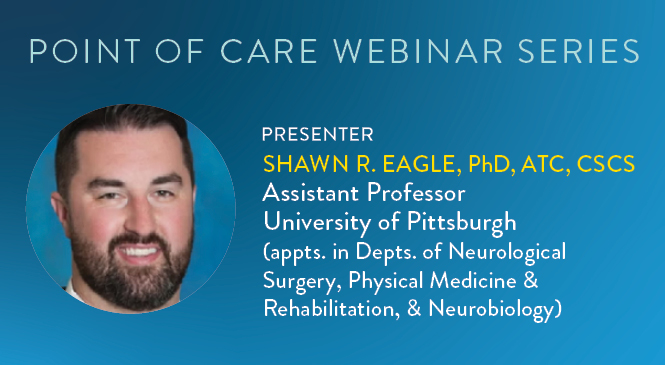
Shawn R. Eagle, PhD, ATC, CSCS is an Assistant Professor at the University of Pittsburgh with appointments in the Departments of Neurological Surgery, Physical Medicine and Rehabilitation, and Neurobiology. His research focuses on the clinical translation of injury biomarkers, with an emphasis on traumatic brain injury diagnosis, recovery monitoring, and point-of-care testing implementation in acute care settings. Dr. Eagle has led work at UPMC to evaluate and implement the i-STAT TBI whole-blood test in the emergency department, with study objectives centered on CT utilization, clinician workflow, and patient outcomes.
Titles of those appearing in the recording represent their roles at the time the webinar took place and may not reflect their current positions.
Who Should Watch
Laboratory Professionals, Emergency Medicine Physicians and Nurses, Neurology Physicians and Nurses, and Hospital Administrators