

ASSESSING CHALLENGING
TBI CASES
TBI CASES
Dr. Davlantes discusses the types of cases he sees in his ED that present challenges to assessing possible head injury at the point of care.
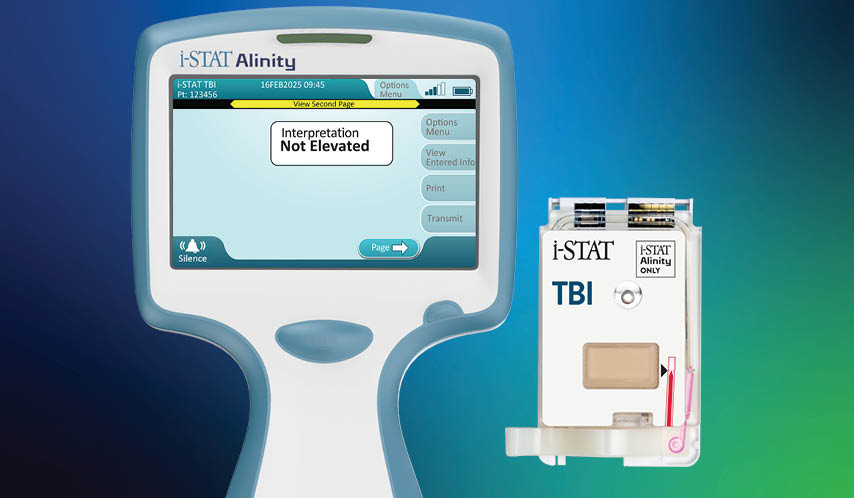
The i-STAT TBI cartridge* is the first point-of-care venous whole blood test for mild TBI that measures brain-specific biomarkers and delivers objective data in 15 minutes.1
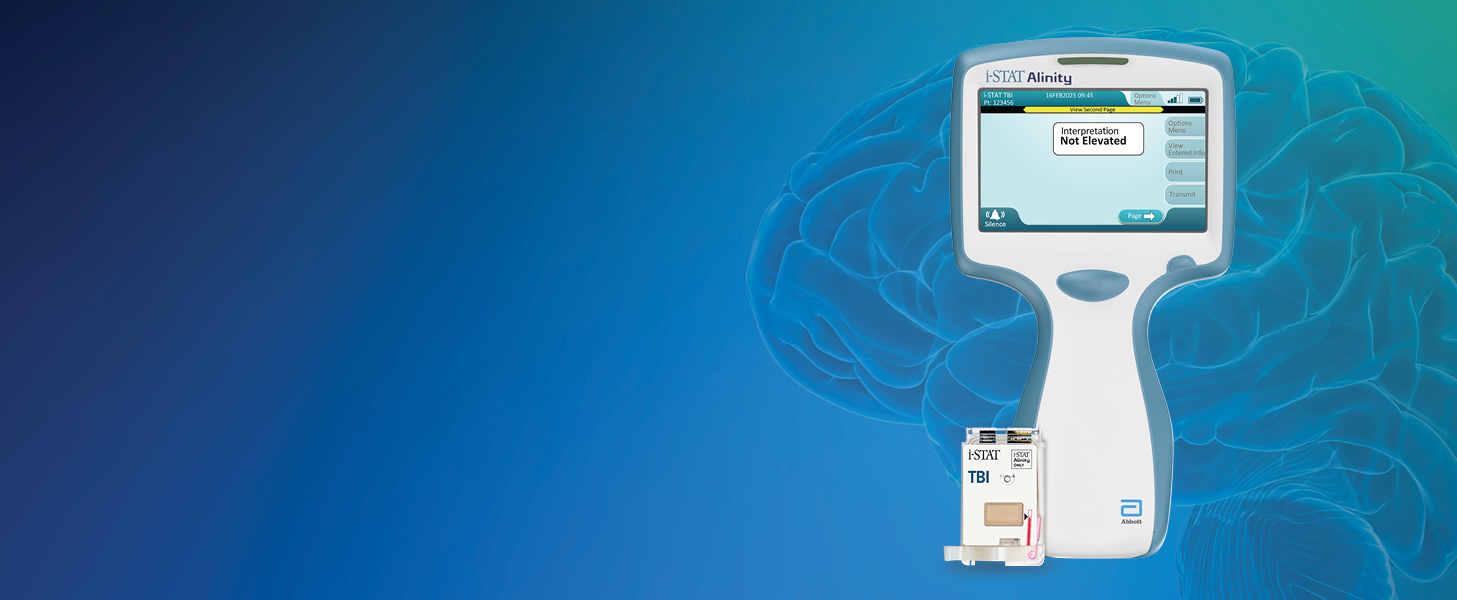
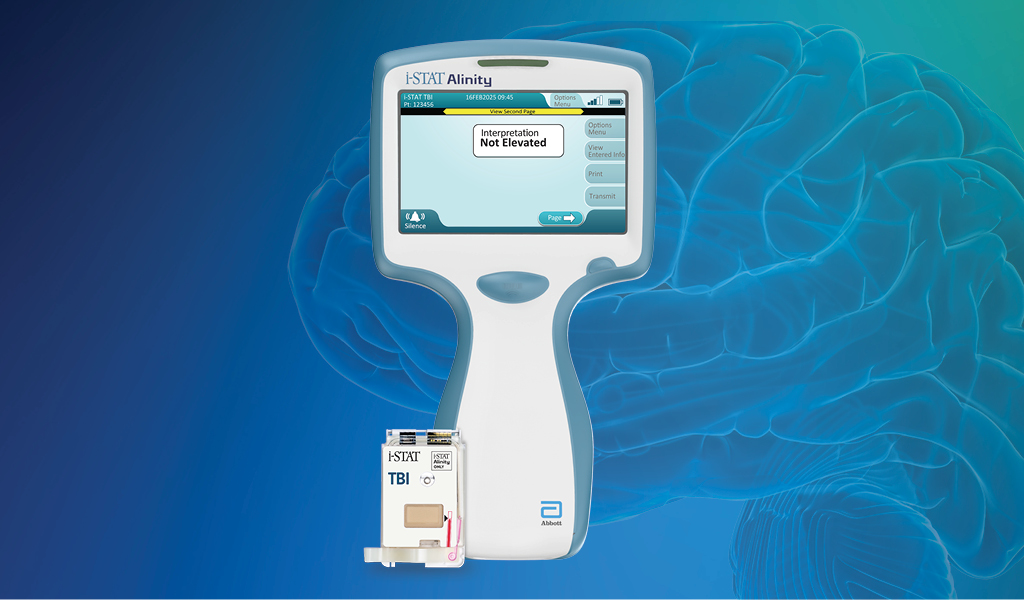
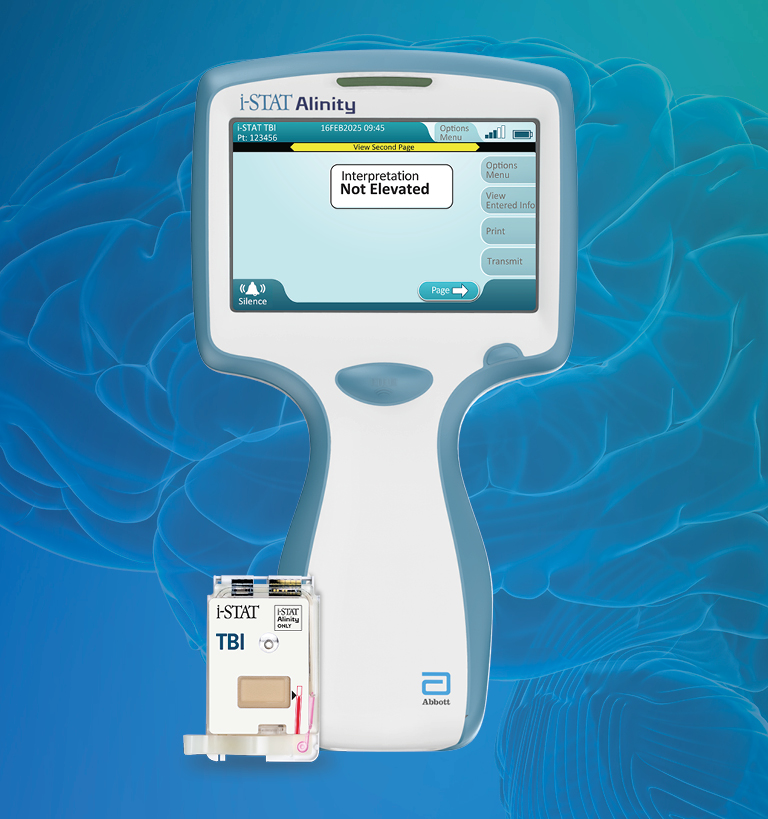

Physical exams may not always complete your assessment or reduce uncertainty of intracranial lesions, especially for challenging-to-assess patients.
GFAP and UCH-L1 are well-validated, complementary, brain-specific biomarkers released into the bloodstream from two different cell types following traumatic brain injury.1

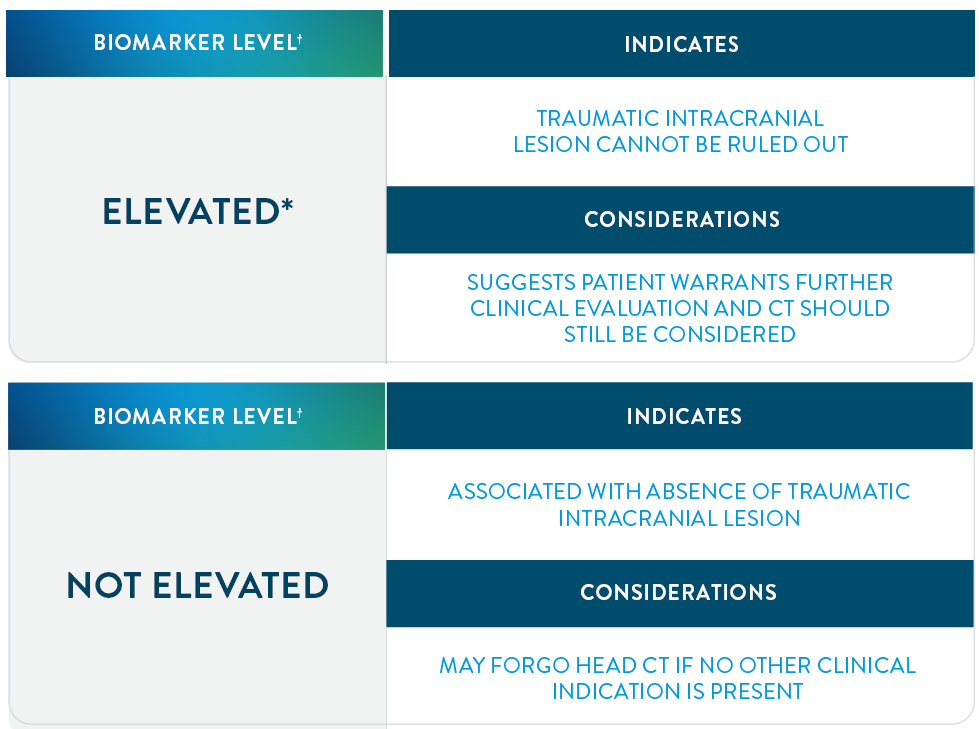
When both GFAP and UCH-L1 are 'Not Elevated', this is associated with the absence of acute traumatic intracranial lesions that would be visualized on a head CT scan.1
*When either biomarker is elevated, further clinical evaluation and CT should still be considered.
The i-STAT TBI cartridge is not intended as a stand-alone assessment tool, but as an adjunct to other clinical information to aid in the evaluation of patients who are being considered for standard-of-care neuroimaging.
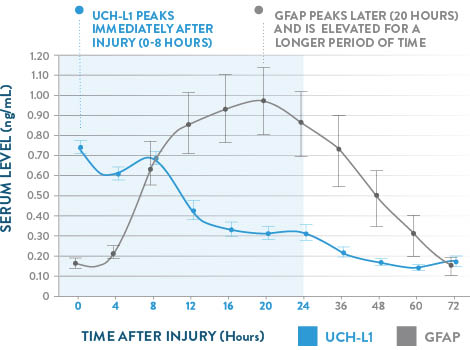
Reliabe 24-hour testing window from the complementary kinetcis of GFAP AND UCH-L11,2
Emergency department (ED) physician*, Dr. Chris Davlantes shares his insights about the challenges in obtaining accurate mild TBI assessments—and how a new assessment tool can help you more objectively and accurately assess your patients at the point of care.
*Titles of those appearing in the recording represent their roles at the time the webinar or video took place and may not reflect their current positions.
Dr. Davlantes discusses the types of cases he sees in his ED that present challenges to assessing possible head injury at the point of care.

Even if access to radiology is readily available, certain factors in the Emergency Department can complicate the decision to order a head CT.

The story of an altered patient under observation in a busy ED serves as a wake-up call for the need to objectively prioritize head trauma cases.

What impact will the i-STAT TBI cartridge have on your patients and care team? Contact us and explore our innovative, point-of-care products that deliver lab-quality results in minutes.



Access more resources to support education and implementation of the i-STAT TBI Cartridge.
Discover more on the role of biomarkers (GFAP and UCH-L1) in assessing mild traumatic brain injury (mTBI).
From the Lancet Regional Health - Americas: summary of published clinical evidence supporting the use of i-STAT TBI in CT decision-making for adults with mTBI.

Learn how University of Michigan implemented i-STAT TBI into their emergency department.
Learn how i-STAT TBI demonstrated clinical performance in ruling out intracranial lesions visible on CT in this multi-center pivotal study.
Learn how Orlando Health was able to reduce CT utilization and length of stay after implementing i-STAT TBI into their emergency department.

a leader in rapid point-of-care diagnostics.
©2024 Abbott. All rights reserved. Unless otherwise specified, all product and service names appearing in this Internet site are trademarks owned by or licensed to Abbott, its subsidiaries or affiliates. No use of any Abbott trademark, trade name, or trade dress in this site may be made without the prior written authorization of Abbott, except to identify the product or services of the company.
This website is governed by applicable U.S. laws and governmental regulations. The products and information contained herewith may not be accessible in all countries, and Abbott takes no responsibility for such information which may not comply with local country legal process, regulation, registration and usage.
Your use of this website and the information contained herein is subject to our Website Terms and Conditions and Privacy Policy. Photos displayed are for illustrative purposes only. Any person depicted in such photographs is a model. GDPR Statement
Not all products are available in all regions. Check with your local representative for availability in specific markets. For in vitro diagnostic use only. For i-STAT test cartridge information and intended use, refer to individual product pages or the cartridge information (CTI/IFU) in the i-STAT Support area.
Abbott - A Leader in Rapid Point-of-Care Diagnostics.